A practical, room-by-room guide to choosing the right sheen for durability, easy cleaning, and a polished look in busy Janesville homes.
Mudrooms and kitchens don’t get “normal” wear. They get Wisconsin wear: wet boots, salt splash, dripping coats, greasy fingerprints, steam, constant wipe-downs, and the occasional backpack drag along the wall. In rooms like these, paint finish matters as much as paint color—because the wrong sheen turns into scuffs, staining, and touch-ups way too fast.
If you read our finish-selection guide, consider this the field manual for the two hardest-working rooms in the house: mudrooms and kitchens. (If you haven’t, start here: How to Choose the Right Paint Finish for Each Room
The big rule for high-traffic rooms: durability + cleanability win
In high-traffic spaces, your finish needs to do three things:
- Resist moisture and grime (mudroom slush, kitchen steam/grease)
- Clean without burnishing (that shiny “rubbed” spot you get from repeated wiping)
- Hide flaws where it matters (because bright light + sheen can spotlight wall texture)
That’s why most high-traffic solutions live in the eggshell → satin → semi-gloss range, with a few strategic exceptions.
Mudrooms: the “impact zone” approach (finish by surface)
Mudrooms work best when you treat them like a durability system—not one finish everywhere.
Mudroom walls: eggshell or satin
- Best overall: Eggshell for a softer look that still cleans well.
- Best for heavy use: Satin if your mudroom walls take hits (kids, pets, sports gear).
- Pro move: Use a washable/scrubbable wall paint in eggshell/satin for fewer touch-ups.
Avoid: Flat/matte in true mudrooms. It looks great on day one and fights you on day thirty.
Mudroom trim, doors, and baseboards: semi-gloss
This is where boots and vacuums collide.
- Semi-gloss is tougher and easier to wipe clean.
- It also gives crisp contrast against wall color (especially with whites and warm neutrals).
Mudroom built-ins, cubbies, and lockers: semi-gloss (or cabinet-grade coating)
If you’ve got cubbies getting daily contact, treat them like cabinetry:
- Semi-gloss is a strong baseline.
- If you want the most durable option, use a cabinet-grade enamel (it levels smoother and cures harder than standard wall paint).
Kitchens: choose finish based on “grease distance”
Kitchens aren’t evenly dirty. The finish you pick should match how close the surface is to cooking, hands, and water.
Kitchen walls:
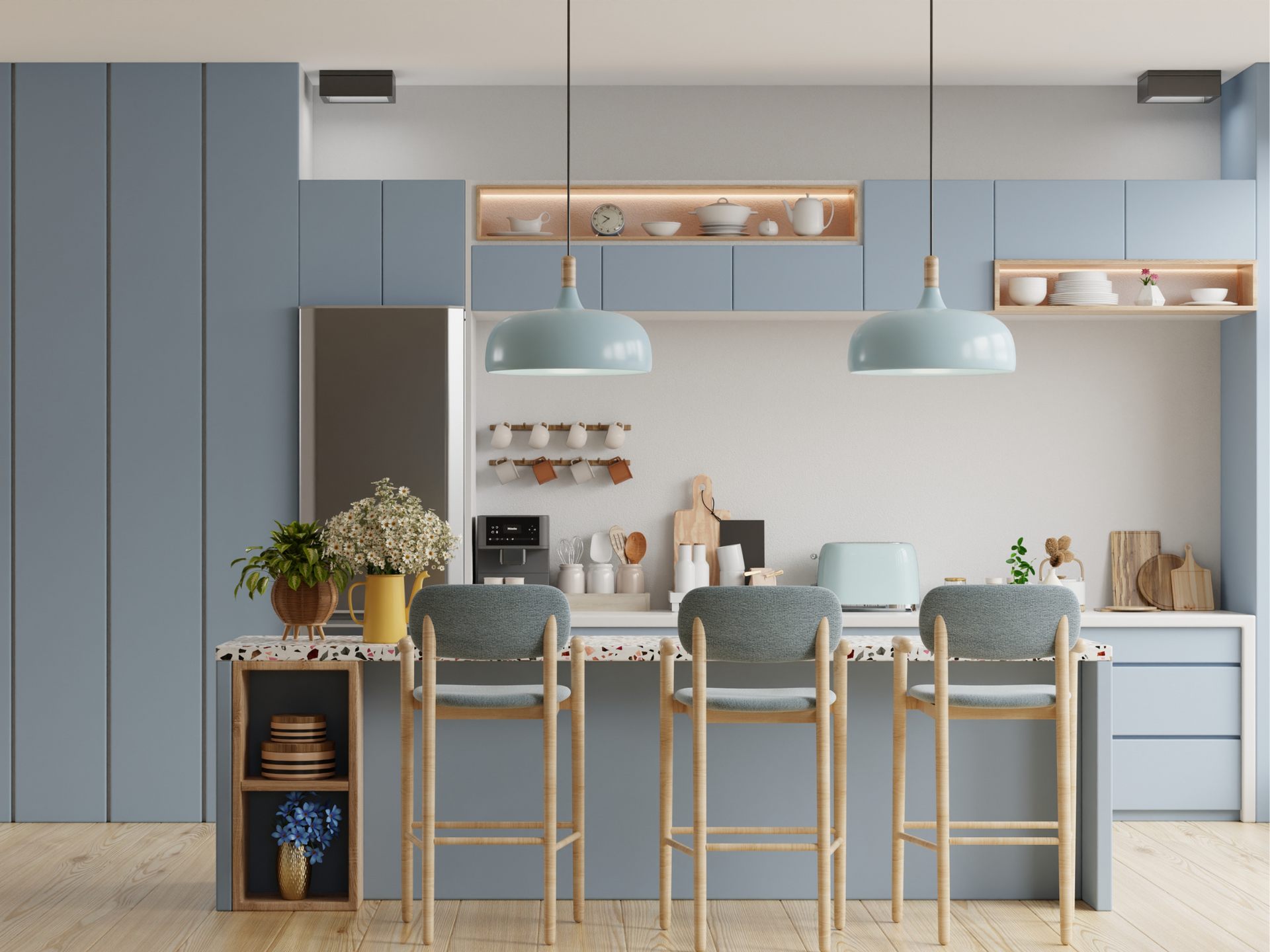
eggshell (most kitchens) or satin (busy kitchens)
- Eggshell is the default for kitchens that get normal cooking and wiping.
- Satin is better if you cook often, have kids, or frequently wipe splatters.
Key tip: In kitchens, the biggest failure isn’t paint—it’s not having a washable film. The right eggshell/satin paired with quality paint will handle routine cleaning.
Backsplashes: paint is usually the wrong battle
If it’s a true backsplash zone behind a range or sink, paint gets punished.
- If you must paint, use a highly durable, moisture-resistant coating and accept that it’s higher maintenance than tile.
- Otherwise, invest in a real backsplash material and keep paint for surrounding walls.
Kitchen ceilings: flat (usually), but upgrade if you get steam
- Flat ceilings hide imperfections and reduce glare from lighting.
- If your kitchen traps steam (poor ventilation), a bath/kitchen-rated moisture-resistant ceiling paint is worth it.
Kitchen trim and doors: semi-gloss
Same logic as mudrooms—easy cleaning, high durability, sharp lines.
Cabinets: don’t use standard wall paint
Cabinets need a coating designed to cure hard and resist blocking, scratching, and oils.
- Best results come from cabinet-grade enamels and a process that includes proper cleaning/degreasing, sanding, priming, and controlled application.
If you’re considering a cabinet refresh, you may also like:
Cabinet Painting Trends: Colors and Styles to Watch:
Quick cheat sheet: best finishes for mudrooms & kitchens
- Mudroom walls: Eggshell → Satin
- Mudroom trim/doors: Semi-gloss
- Mudroom cubbies/built-ins: Semi-gloss or cabinet-grade enamel
- Kitchen walls: Eggshell → Satin
- Kitchen trim/doors: Semi-gloss
- Kitchen cabinets: Cabinet-grade enamel (not wall paint)
- Kitchen ceiling: Flat (or moisture-resistant ceiling paint if needed)
Two “hidden” factors that change the right answer
1) Lighting
Brighter kitchens and mudrooms (big windows, strong LEDs) make sheen more noticeable. If your walls have imperfections, eggshell can look better than satin.
2) Surface condition
If walls are patched or textured inconsistently, higher sheen will highlight it. The smarter play can be:
- Better prep + eggshell, rather than satin on a rough surface.
Want this done right (and to last)?
High-traffic rooms aren’t the place for guesswork. The right finish is only half the outcome—the other half is prep and product selection that matches your home’s use.
If you want a durable, cleanable finish that looks sharp and holds up through real life in Janesville, schedule a quote with Jimmy’s Painters: